
Case study: Norsk Gjenvinning’s fully automatic paper sorting line in Norway
RECAP
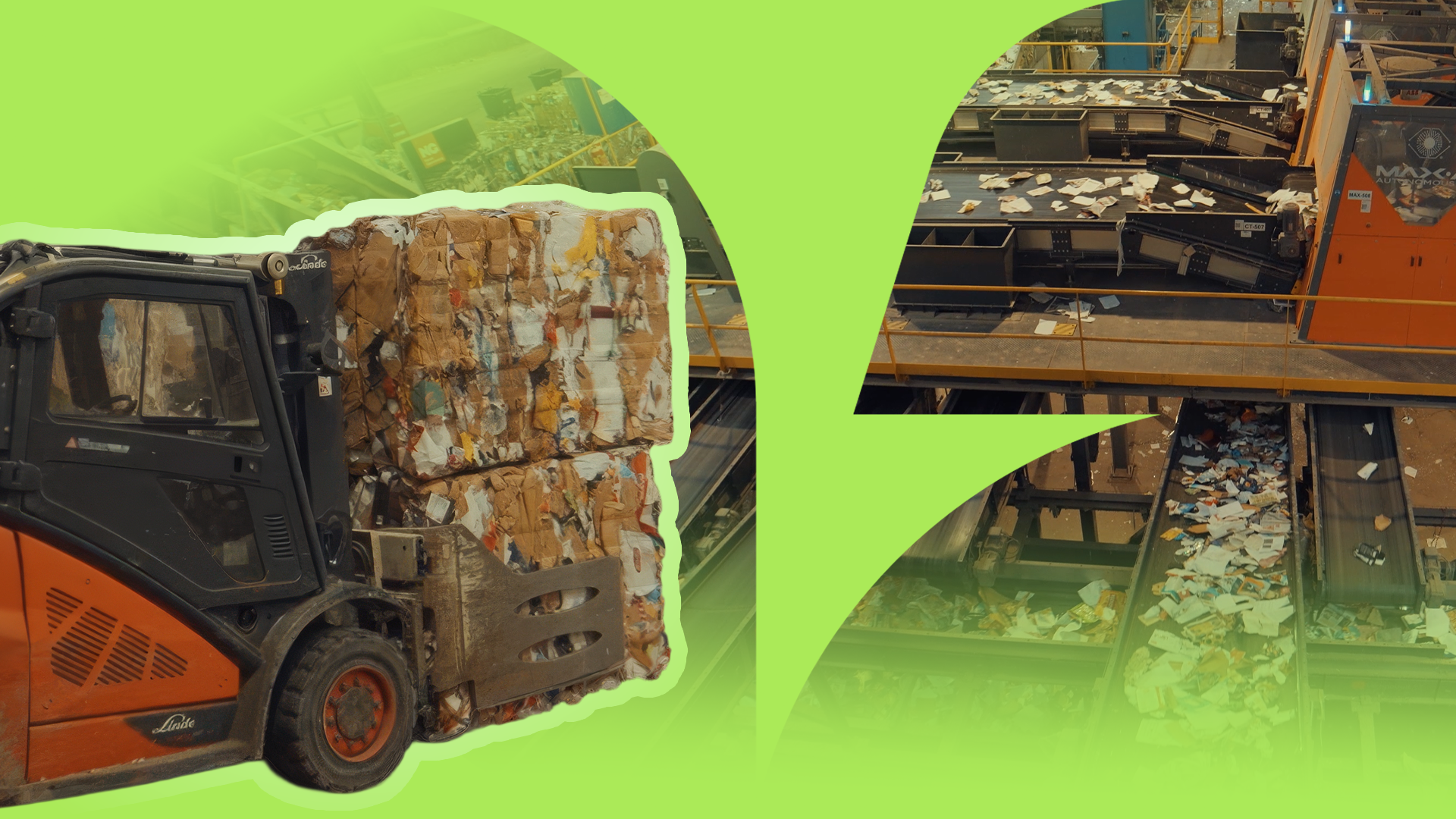
- The automated paper sorting line processes 20 t/hour and up to 120,000 t/year, helping turn paper waste into high-quality secondary raw material.
- Produces de-ink fibre at 97.5% purity with less than 3% residue, while giving NG Group the flexibility to adjust output fractions to customer needs.
- Azortum acted as system integrator, engineering the layout, conveyors, structures, bunkers, and later supporting the retrofit that added Tetra Pak recovery.
TURNING PAPER WASTE INTO COMPETITIVE SECONDARY RAW MATERIAL
NG Group, also known as Norsk Gjenvinning, is one of the Nordic region's leading providers of circular solutions and environmental services. The company manages a vital part of the region's waste infrastructure, handling more than two million tonnes of waste each year.
For NG Group, recycling is not only about moving material away from landfills. The goal is to industrialize waste management and produce secondary raw materials that can compete with virgin materials in the industrial market.
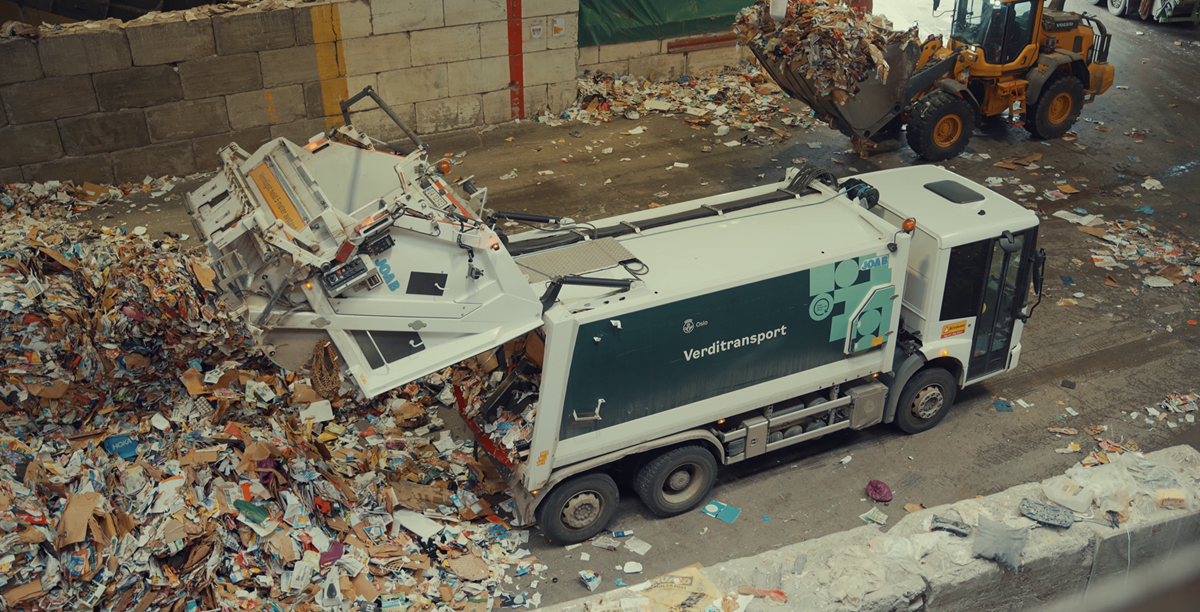
Paper recycling was an important part of that ambition. NG Group wanted a sorting line that could process large volumes of paper waste from commercial and private consumers, increase automation, improve flexibility, and deliver consistently high-quality output.
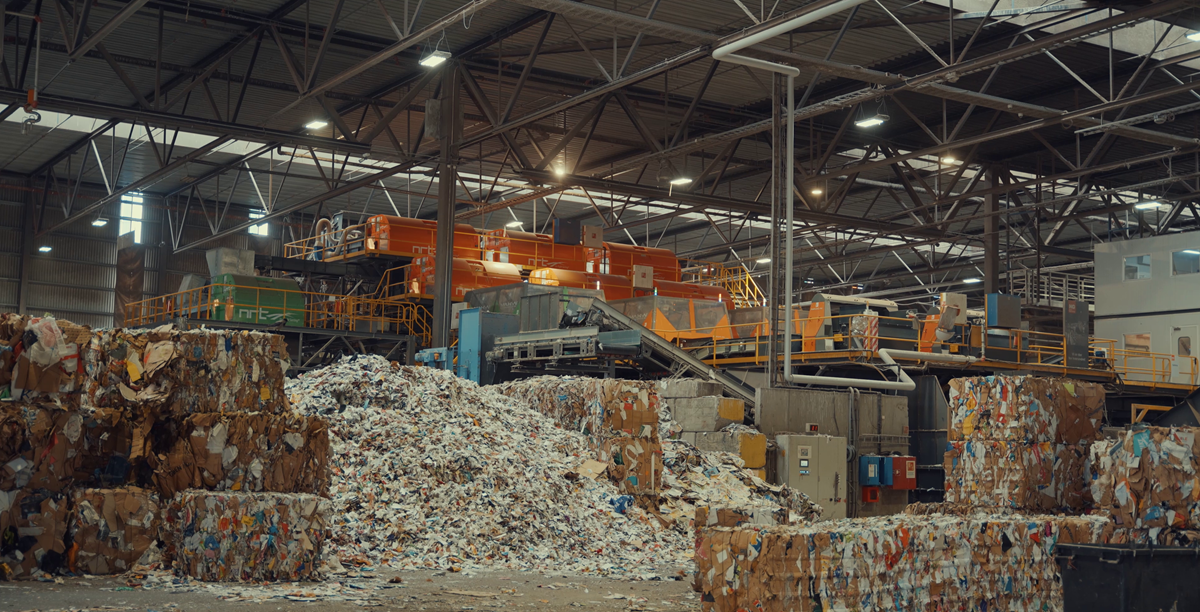
The result was a fully automated paper sorting line in Oslo, built in 2018 and completed in 2019. Today, the line handles 20 tonnes of paper waste per hour and up to 120,000 tonnes per year.
THE BUSINESS NEED: PROFESSIONALISING PAPER RECYCLING
NG Group saw a clear need to make waste management more professional and industrialized. To compete with virgin raw materials, recycled paper fractions had to meet strict industrial requirements for purity, yield, stability, and price.
The investment in the new paper sorting line was built around three practical goals:
- increase automation
- increase operational flexibility
- maintain and improve output quality
The line also had to support NG Group's downstream customers. Different industrial partners require different paper qualities at different times. NG Group needed a system that could adjust production to meet those requirements without compromising yield or creating unnecessary residue.
CHOOSING THE TECHNOLOGY AND INTEGRATING IT INTO ONE WORKING LINE
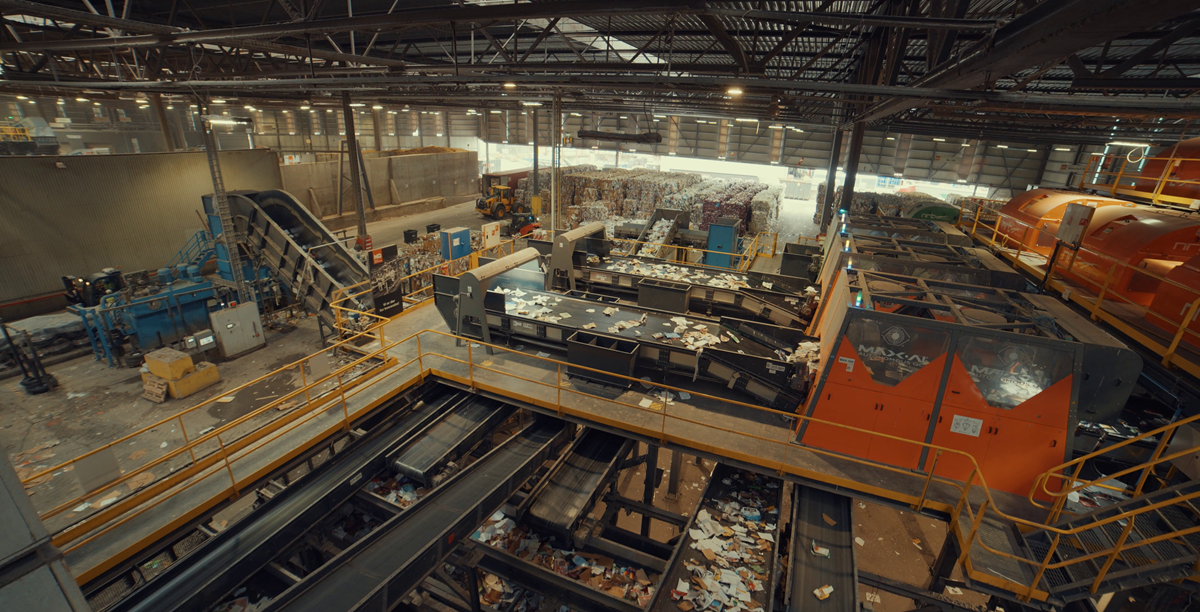
NG Group selected BHS as the primary technology provider for the paper sorting process. The line includes specialist sorting technologies such as NRT optical sorters and Max-AI robotic sorting.
Azortum was chosen as the system integrator. That meant turning the selected technologies into a single, complete, functional production line within an existing Oslo facility. The work included the overall layout, detailed engineering, conveyors, structures, feeding bunkers, material bunkers, and the integration of specialist equipment from multiple suppliers.
In addition to simply placing machines in the existing building, the system had to fit NG Group's material stream, capacity target, quality requirements, and operating schedule.
The Oslo plant operates in a city environment, where space is limited, and every meter has to be used carefully. NG Group did not have unlimited room for storage or equipment access. Azortum's layout had to be area-efficient while still giving paper enough space to move through the line without bottlenecks.
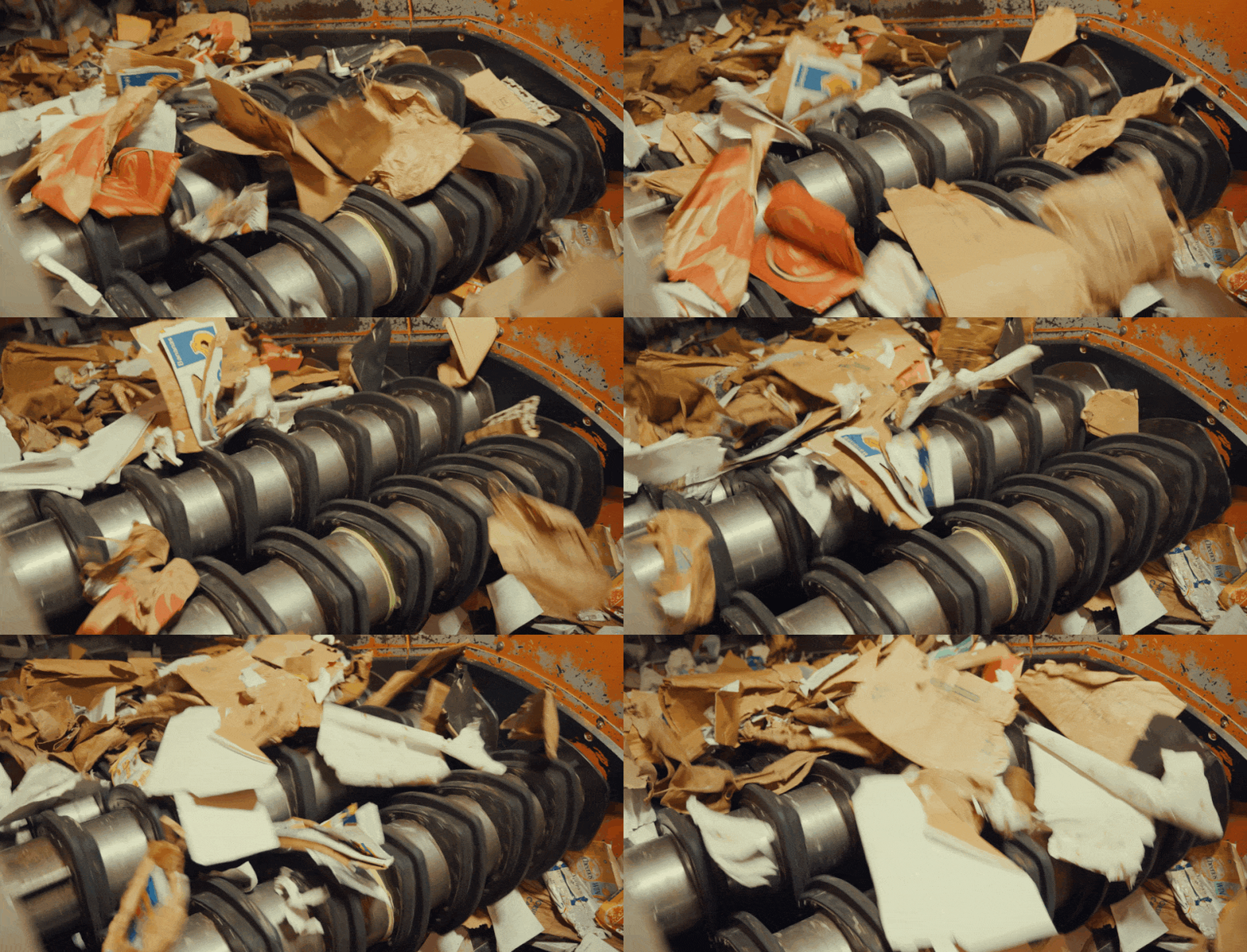
That was a central engineering challenge. Waste paper is light, thin, and high-volume. Even when the tonnage is moderate, the material takes up significant space. It can also get stuck easily in corners, chutes, covered conveyor sections, and transition points.
To keep the line running reliably, Azortum designed the material flow around the behavior of paper itself. Conveyor widths, turns, chutes, and downstream transfer points were planned with enough reserve to prevent blockages. In key areas, open conveyor designs were used to avoid paper getting trapped between conveyor ceilings and moving material.
This helped achieve the simple goal of keeping the paper moving.
INSTALLATION UNDER A STRICT TIMELINE
The timeline of delivering this line was tight from the start.
The contract was entered into in September 2018. By December, the first structures and conveyors needed to be shipped to the site. Final products were shipped in February 2019.
For a complex automated paper sorting line, that left little room for delays. Engineering, production, and logistics had to progress in parallel.
Azortum divided the work into clear steps. Conveyor modules and structures were produced piece by piece while detailed engineering continued. This phased approach enabled the project to move forward before all parts of the line were fully finalized.
The installation also had to be coordinated with ongoing plant operations. NG Group could not simply shut down the facility for an extended period, so Azortum adapted the installation plan to NG's production needs, reducing the installation time by several weeks.
For Azortum, the project was also important because it marked the first time the team integrated robotic sorting into a waste-sorting line.
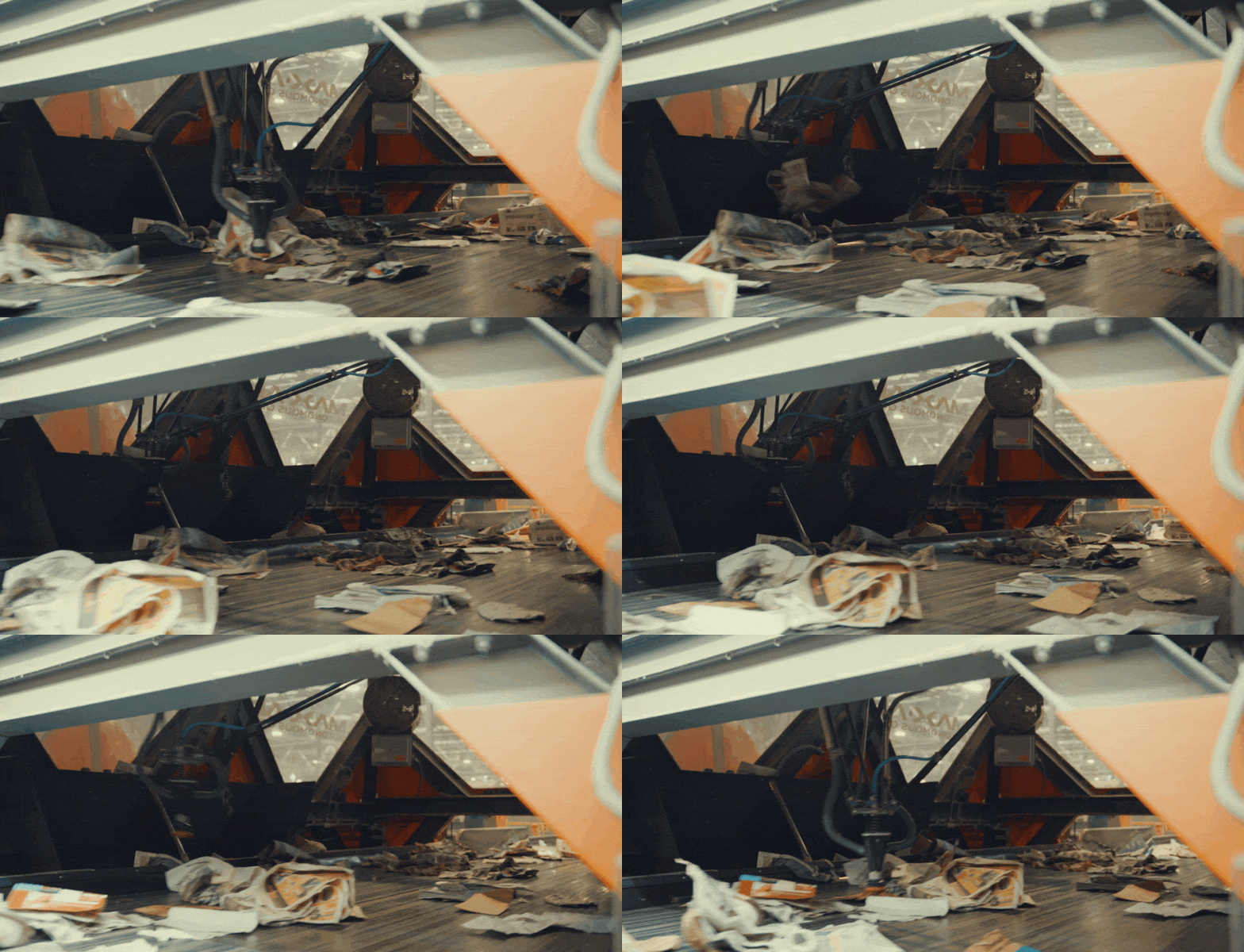
Working with Max-AI required close coordination between the robotic systems, optical sorting equipment, conveyors, material presentation, and quality-control logic. The robots had to be integrated into the full process, not treated as separate machines.
This is where the importance of system integration is most evident, because every part of the line affects the next one. Material speed, layer depth, conveyor width, transfer points, and sorting accuracy all influence final output quality. The equipment had to work together as one production system.
OUTPUT FLEXIBILITY AND QUALITY CONTROL
The automated line gives NG Group much greater control over output quality. With optical sorters and robotic sorting, operators can adjust the quality of each fraction to meet customer requirements.
And that flexibility matters commercially. NG Group can produce the right quality at the right time and at a competitive price.
One of the main outputs is de-ink fiber, which is used to produce new paper. NG Group set a quality requirement of 97.5% purity for this fraction, allowing it to compete with virgin wood-based raw material in paper production.
The plant also delivers less than 3% residue or waste. Because paper loss into the residue stream is low, NG Group can achieve both high purity and high yield across the process.
The paper stream in Norway also contains a significant amount of Tetra Pak packaging, creating an opportunity to recover more material from the same input stream.
A later retrofit was carried out to improve Tetra Pak recovery from the paper line. The installation window was extremely short: NG Group planned around 11–12 days for the full installation, but the retrofit section was installed in approximately seven to eight days.
This retrofit showed the value of the original integration approach. Because the line was designed as a flexible system, new functionality could be added without requiring a major rebuild.
- "I think it's important for us to have a collaboration with the supplier who understands our needs and the needs of society, for when it comes to changes in the material streams. The key is to have a collaboration where time and qualities of the essence. That's something Azortum definitely can provide for us," Tomas Korneliussen, Operations Manager at Norsk Gjenvinning.
PARTNERSHIP BEYOND INSTALLATION
NG Group describes Azortum's strength as the ability to understand the customer's problem statement and combine that understanding with knowledge of different technology suppliers.
That is the role of a system integrator: not to force a single technology package onto the customer, but to understand what the plant needs to achieve and then bring the right components together into a single working system.
Azortum's involvement did not end after installation and commissioning. NG Group has continued to rely on Azortum for support, follow-up, and on-site assistance when needed. As NG Group's technical project team described it, Azortum does not only supply machines or technology. Azortum helps solve the customer's operational problem.
The result is a high-capacity paper-sorting line that provides NG Group with the flexibility, quality, and yield needed to produce secondary raw materials for industrial markets.
For the Nordic waste sector, the project is a practical example of what circular economy infrastructure requires: robust technology, precise engineering, close collaboration, and a system integrator who understands the customer's operations from start to finish.
Let's discuss your project!
At Azortum, we are committed to developing unique solutions that are sustainable to operate and profitable for your company.
We have received your information and will be in touch with you shortly. Thanks!