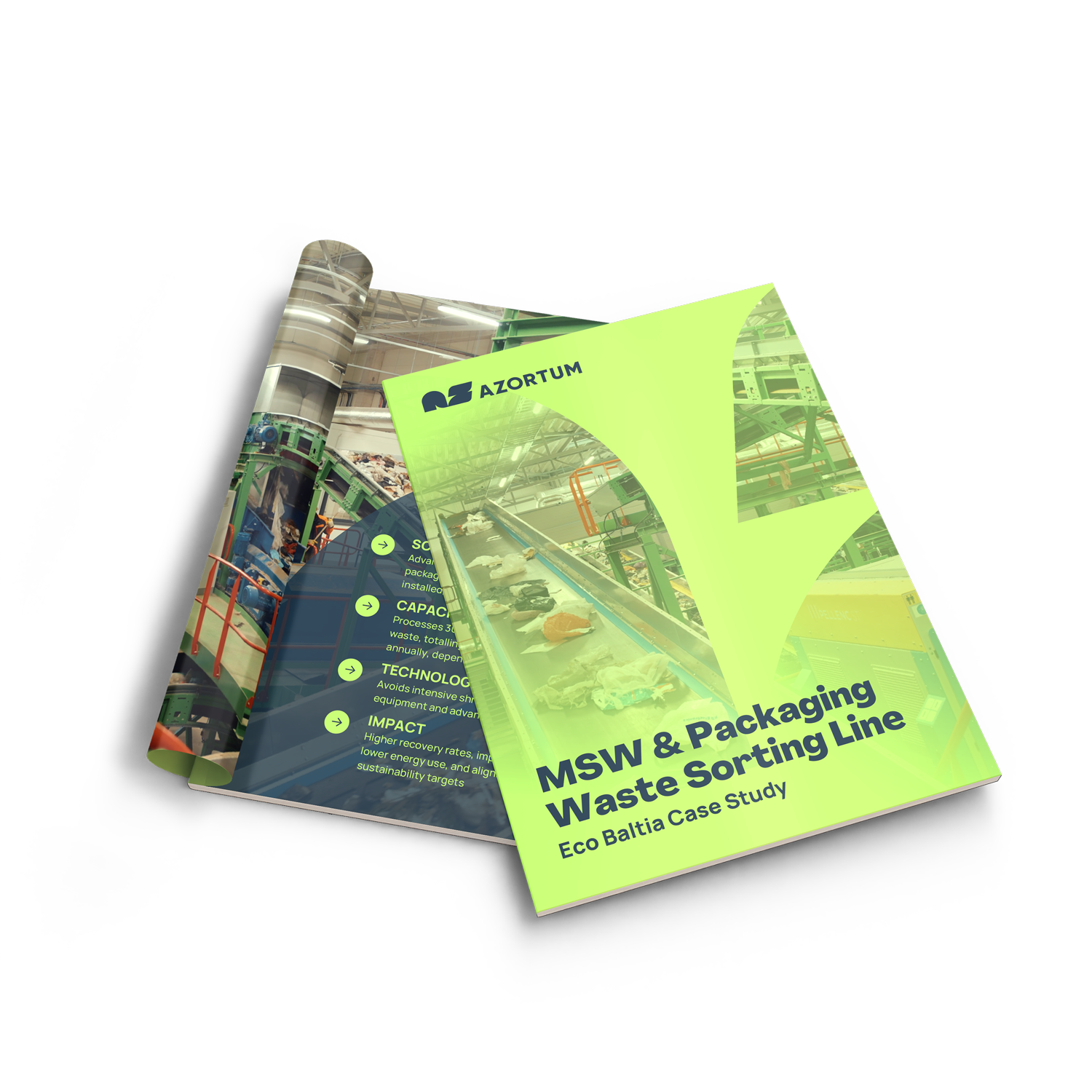
MSW & Packaging Waste Sorting Line for Higher Recovery and Lower Energy Use
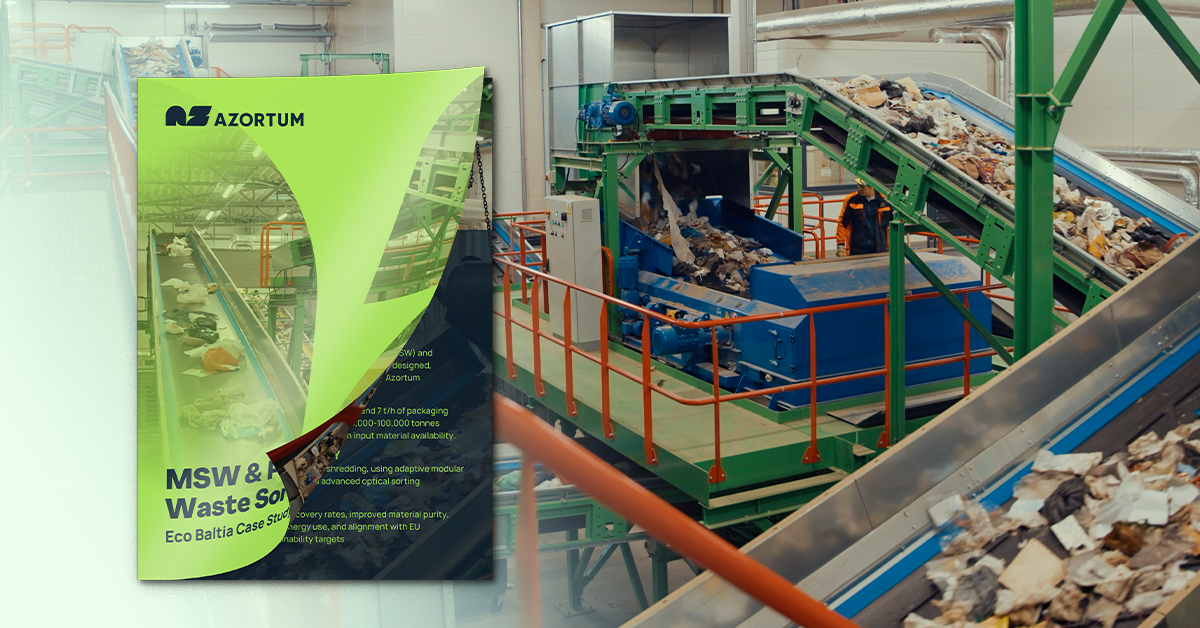
How Eco Baltia upgraded municipal solid waste and packaging waste processing with a high-throughput sorting line engineered for cleaner fractions, lower energy consumption, and long-term compliance with EU recycling targets.
The Challenge: Higher Volumes, Stricter Standards, Better Energy Performance
As Latvia’s leading waste and environmental management company, Eco Baltia faced a challenge that is increasingly common across Europe: rising volumes of municipal solid waste and packaging waste, tighter environmental regulation, and growing pressure to improve recycling performance. Traditional processing logic based heavily on intensive shredding was no longer sufficient for the required efficiency, material purity, or energy performance.
Eco Baltia needed a new sorting solution that could:
- improve material recovery rates
- meet strict EU recycling standards
- reduce operational energy consumption and processing waste
- handle both municipal solid waste and light packaging streams efficiently
For plant managers and technical decision-makers, this is the real engineering question: how do you increase recovery and fraction quality without building a process architecture that wastes energy or damages material value?
The Solution: A Tailored, High-Throughput Sorting System
Azortum designed and delivered a fully integrated MSW and packaging waste sorting system built around throughput, selective separation, and operational control. The line was engineered to process 30 tonnes of municipal solid waste per hour alongside 7 tonnes of packaging waste per hour. Instead of relying on aggressive pre-treatment, the process uses an adaptive modular layout that directs material to the right separation steps from the start. That reduces unnecessary shredding, preserves recyclable value, and supports lower power consumption.
The system is controlled through SCADA, giving operators a visual overview of the line, real-time process visibility, performance monitoring, and power-use tracking. This strengthens operational decision-making and gives the facility better control over line efficiency under changing input conditions.
The installed system combines automation with practical quality assurance across the full process chain, including:
- manual pre-sorting for oversized and non-compliant items
- screening units for size-based material separation
- optical sorters for HDPE, PET, PP, Tetra Pak, film, paper, and cardboard
- automated fraction handling for efficient downstream movement
- final manual quality control for high-purity outgoing fractions
Output Fractions and Plant Data
The line produces a commercially relevant output mix that supports downstream recycling and recovery performance:
- Fe-metal
- Non-Fe metal
- Paper mix
- Film clear
- Film mix
- PP
- PET clear
- PET mix
- HDPE
- Tetra
- RDF
Technical footprint
- Area: 3,200 sqm
- Installed power: 545 kW
The Result: Future-Ready Waste Sorting Performance
Eco Baltia’s upgraded facility now operates as one of the region’s most advanced waste sorting plants for sustainable MSW and packaging waste processing. The engineering outcome is not only higher throughput, but also better recovery efficiency, reduced bottlenecks, cleaner fractions, and lower operating energy demand.
Key benefits include:
- Advanced recovery efficiency through optical sorting and optimised material flow
- Lower energy use by eliminating intensive shredding where it is not process-critical
- Stronger sustainability impact through reduced landfill dependency and higher resale value of recyclables
- Improved readiness for future environmental demands through smart, adaptable process design
This is the kind of sorting line engineering that matters in practice: not just moving more tonnes per hour, but improving purity, preserving recyclable fractions, and lowering lifecycle operating costs at the same time.
Why This Project Matters
The Eco Baltia project demonstrates what modern waste sorting infrastructure should deliver: a process engineered around actual material behaviour, real plant economics, and regulatory direction. Instead of forcing every input stream through energy-intensive treatment, the system applies the right technology at the right stage. That improves recovery performance while keeping the plant more efficient and more adaptable.
For operators facing increasing material complexity and stricter recycling obligations, this kind of modular engineering approach creates a more resilient plant architecture — one that performs today and remains relevant as standards continue to rise.
Planning an MSW or Packaging Waste Sorting Upgrade?
Azortum delivers turnkey waste sorting and bulk material handling solutions built around your process targets, footprint limitations, and business case.
We talk business.
We start by understanding your operational goals, financial targets, and compliance requirements — then engineer a solution that supports them in both the short and long term.
We are dedicated to you.
From consultation and layout engineering to installation, commissioning, and after-sales support, we stay engaged throughout the lifecycle of the project.
We are agile.
Independent from fixed equipment brands, we select and integrate the technologies that best fit your material streams, capacity needs, and site constraints.